

Strategic Alliance, a key tool.
In today's business world, competition is increasingly fierce. Companies face a changing and challenging environment in which they must be able to adapt quickly to remain competitive. In this context, a strategic alliance has become an indispensable tool for business growth and success.
“Alliances are necessary for survival.”.
Abraham Lincoln
What is a strategic alliance?
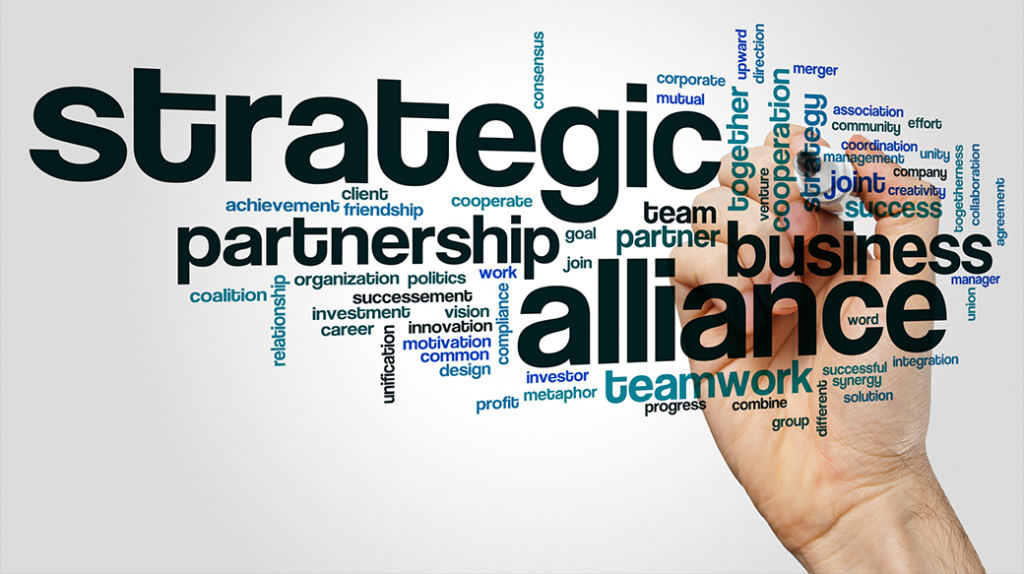
A strategic alliance is an agreement between two or more companies to collaborate on a specific project or activity, specifying the resources, knowledge, or capabilities that will be shared.
What are the benefits of strategic alliances?
Strategic alliances can provide companies with a number of benefits, including:
- Access to new markets: these can be geographical or related to products or services.
- Improved efficiency: by sharing resources and knowledge.
- Risk reduction: sharing responsibility for projects or investments.
- Image improvement: to improve the image, by associating with prestigious companies.
What types of strategic alliances exist?
Strategic alliances can be classified according to different criteria, such as the type of relationship established by the companies, the objectives they pursue, or the geographical area in which they operate.
By type of relationship:
- Collaborative alliances: these are based on cooperation between companies, which share resources and knowledge to achieve a common goal.
- Joint venture alliances: These alliances involve the creation of a new company by the participating companies.
- Franchise alliances: allow a company to sell the rights to use its brand or business model to another company.
By objectives:
- Marketing alliances: these are geared towards developing joint marketing strategies and increasing the customer base.
- Production alliances: these are geared towards the joint development of products or services.
- Research and development partnerships: these partnerships are geared towards the development of new technologies or products.
By geographical area:
- Global alliances: these are established between companies from different countries.
- Regional alliances: these are established between companies from the same continent or region.
- Local alliances: these are established between companies from the same country or region.
How to create a successful strategic alliance?
Strategic alliances can be a highly effective tool for business growth and success, but it's crucial to implement them properly to minimize risks. Here are some tips for creating a successful strategic alliance:
- Defining the objectives of the alliance: It is important to be clear about the objectives pursued with the alliance, both at a general and specific level.
- Establish a relationship of trust: Strategic alliances are based on trust and collaboration, so it is important to establish a solid relationship between the participating companies.
- Assessing partner competencies: It is important to assess partner competencies to ensure they have the necessary capabilities to achieve the alliance's objectives.
- Engaging partners: It is important to ensure that partners are committed to the alliance and are willing to invest the necessary resources for its success.
- Aligning corporate cultures: It is important that the corporate cultures of companies are compatible to avoid conflicts.
- Carefully plan the alliance: It is important to carefully plan the alliance, taking into account all aspects involved, such as the resources to be shared, the objectives to be achieved, and the risks involved.
- Closely monitor the progress of the alliance: It is important to closely monitor the progress of the alliance to ensure that the objectives are being met.
“Alliances must be built on honesty and loyalty“.
Franklin D. Roosevelt
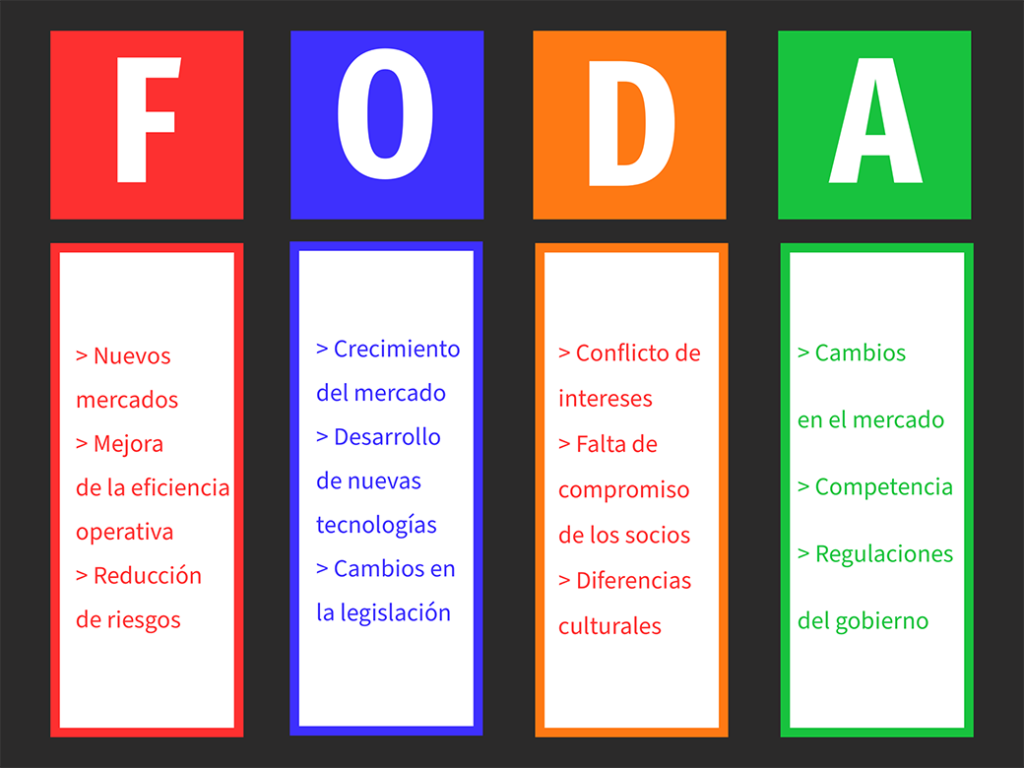
SWOT Analysis of the Strategic Alliance.
If you plan to enter into a Strategic Alliance to achieve any of your company's objectives, it is wise to conduct, among other things, a SWOT analysis, which will allow you to identify relevant aspects that will help you make the best decision.

Consultant and Operations Management Specialist. With over 25 years of experience in the industrial and energy sectors, he has collaborated with business owners in the analysis, planning, negotiation, marketing, administration, and execution of service and maintenance projects.
He has provided executive consulting to board presidents and senior management for strategic decision-making in participating in bidding projects, as well as in the analysis and improvement of their management, operations and industrial safety processes.
If you want to improve and optimize your projects, together we can find the best solution for your industrial needs and ensure your projects are a success.